
When I think about Ischia, I think about feeling comfortably “at home”, free, and rejuvenated in the land of my ancestors.
The bond I have with this island is strong and deep perhaps because both of my parents who were born and raised on the island imbued my childhood with Ischitan culture. And what is “Ischitan culture”?
Well, it goes beyond the dialect, traditions, and customs. There is also a distinct psychology that is responsible for the way Ischitans interpret, dissect, discern, analyze and manage people and situations…it truly separates them not only from non-Italians but also from other Italians! (more on this in another blog! I digress) For now, let me say that although I had been introduced to the island when I was only a few months old, I recall being intrigued and bewitched by this wonderland while on a family trip in the early 80s.
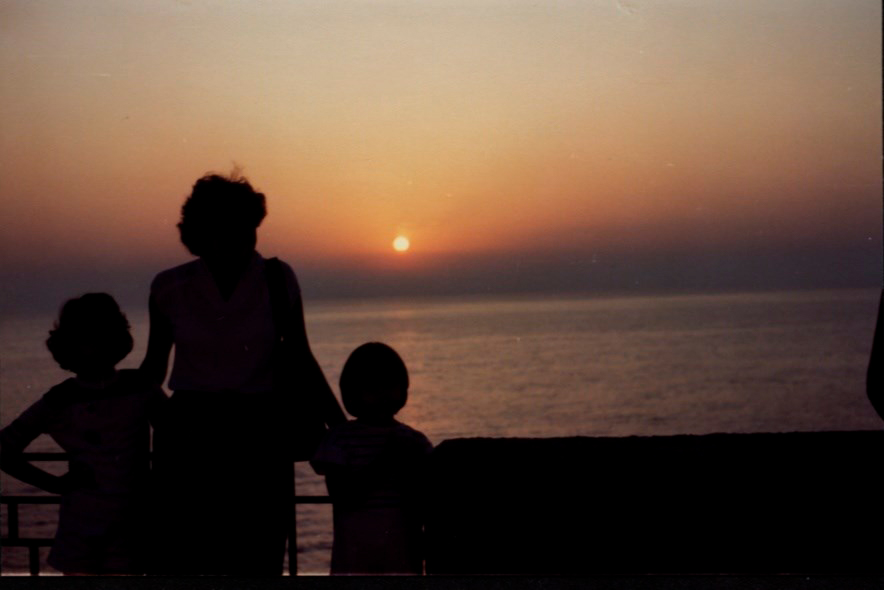
My sister and I had heard numerous stories about my grandparents and relatives who lived mainly in Ischia Porto, Cartaromana and Barano. My parents were very close to their family and friends in Ischia….they would maintain communication with them and would have us talk to them on the phone and get to know them. They seemed so far away, just voices that became familiar over the phone. Finally, we went to visit “l’isola verde”. Little did I know that this was going to be the beginning of an attraction for Ischia that would only grow stronger over time.
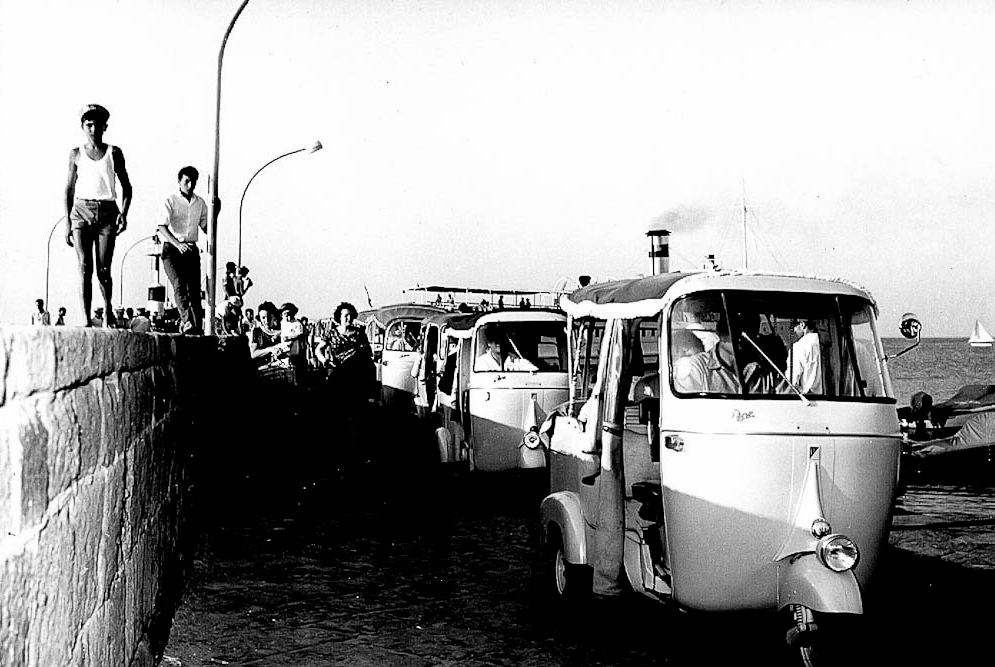
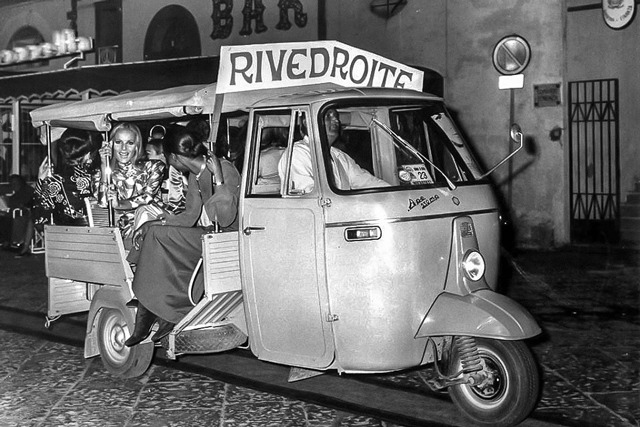 I believe that as soon as my sister and I set foot on the island we had a case of culture shock (although we upheld Ischitan traditions at home, we were growing up in Canada. Yes, there were many Italian immigrants in our community—we even learned Italian at school—but the environment outside of our home was Canadian). On our way to our lodging, we saw tricicli buzzing around as taxis while some scugnizzi on roller skates held on the back end for a daringly dangerous ride; we saw vespe make serpentine moves throughout the narrow streets; we heard the dialect that we always heard being spoken between my parents and relatives back home. Once we got to the house, we learned that we had to wait for “l’acqua di Napoli” between certain hours and that we were only to drink the water from the Nitrodi springs that relatives had already bottled for us (I later learned about the underwater aqueduct from Naples and the need to be parsimonious with how water was used). Absolutely no one spoke to us in English, except for a couple of words here and there. Seeing lucertole (little lizards) scurry across the pavement was as commonplace as seeing squirrels back home. My sister and I were a bit uneasy about all of these novelties, but not altogether disheartened, for there was life in the streets, and a landscape that was inviting.
 Soon enough, we began interacting with children our age—they were relatives and friends of the family. Encouraged by the fact that they were just as interested in us as we were in them, we spoke to them in Italian, as they spoke to us, interestingly enough, not in napoletano or ischitano but in Italian. Some relatives would tease and ask us “si’ fidanzat?” When we’d ask our parents what this meant, they simply said the answer to that question was “no” and that people were kidding around. Around the corner there was a lady, Culett’ (Nicoletta De Angelis), who would call out to people in dialect phrases that elicited laughter from locals and tourists alike. My father knew her from his childhood, she was from the neighbourhood. I was afraid of her, as were other children. Now aware of her past trials and tribulations, I wish I had taken more of a sympathetic interest in her, like my friend Mariella, who would run errands for her at the generi alimentari. Culett’ remains to this day an icon of la Spiaggia dei Pescatori.
 Breakfast was a delight. It was mainly characterized by Matese milk, Bauli cornetti and sometimes Mulino Bianco cookies. We also couldn’t have enough of the succhi di frutta. We soon learned that it was the acqua di Nitrodi that we preferred to Ferrarelle, when given the choice. These items usually came from my great uncle’s ‘puteca’, that is, his ‘generi alimentari’ store….somewhat of a convenience store with groceries (several years later, when studying the dialect, I discovered that ‘puteca’ was one of several dialect words of Greek origin). It was there that we got a pair of ciabatte (plastic slip-ons) like the other kids and adults. Eventually we even got a pair of zoccoli (wooden clogs) to “fit in”….how we cherished these items!
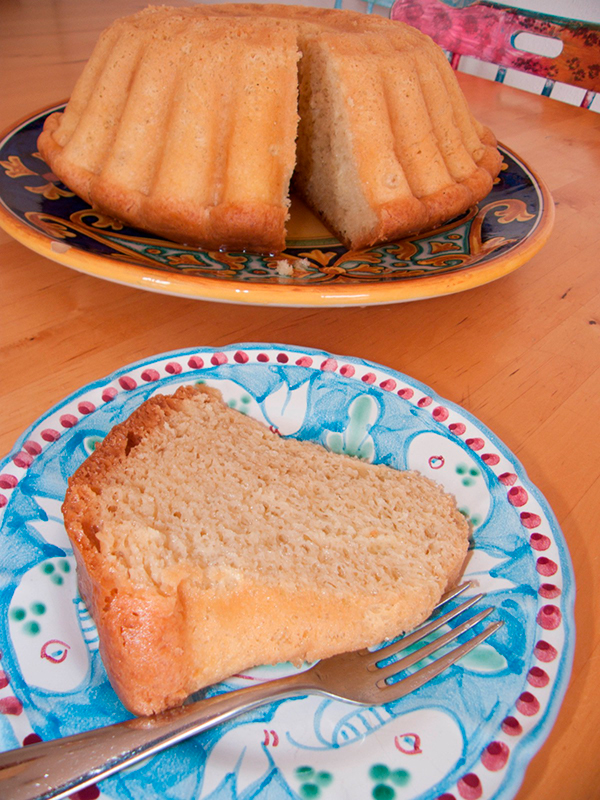
As a result of meeting up with so many relatives and friends, we were often out late in the evenings….a real treat! I will never forget the long drive up to the Bracconiere and the beautiful evening view, or the glorious sunset at the Soccorso in fascinating Forio, the western municipality in which my father pointed out to us the Torrione, Monte Epomeo and more. Although he was from Ischia Porto, he loved Forio’s charm. Since traffic on the island was (and is) pretty stressful at times because of the narrow streets and the parking restrictions, we would often meet whoever was driving us somewhere at the “fierr’ cavall’” (the farrier), known today more commonly as the Piazza degli Eroi. I guess during the time that my parents were on the island horses’ shoes were made there. The Bar Calise in the Piazza degli Eroi would be where we’d pick up pastries when visiting relatives. I learned the names of most of them, preferring the Babà.
Often, we would take walks with my parents in the evening. There were always so many people strolling, often window-shopping. The evening air was fresh and there was always excitement in the streets….the evenings seemed so long. In Ischia Porto’s Pineta there would be exhibits for children, puppet shows, and le giostre! On these evenings we’d excitedly look forward to gelato that was nothing like ice cream! For us, Stracciatella, Fiordilatte, and Kinder were among the unique flavours we couldn’t get enough of!
Cartaromana is where my mother was born and raised. We saw the lemon trees she told us she used to climb as a child and the majestic Castello Aragonese that she loved waking up to every day. We saw the home in which she was raised and met the famous Chiarina, the woman who helped my grandmother raise my mother and her siblings after my grandfather passed away. Later, we went to the local cemetery of San Michele where my paternal grandparents and maternal grandfather rest. I recall feeling at ease in that outdoor cemetery, so peaceful with birds chirping and the sun shining.
Our favourite beach was the Maronti. We loved the sea, but probably not as much as my father! He would swim so far. We would tell him to stay close to the shore but he reassured us that this was “his sea” and not to worry. My sister will never forget her first jellyfish sting. Luckily, Sergio from the Bagno Muga, the bar, came over with lemon to treat the sting. The Algida ice cream helped too…..
There was reassurance in seeing that some customs that we preserved back home were prevalent in Ischia. One was the use of o’ sacchetiello/ ‘a vurzella, a small amulet made of two square pieces of cloth sewn together, containing the paper image of saint. This amulet was usually blessed and then pinned to the undergarment of a child to protect him/her from the malocchio. I remember that after gym class in the change room at school kids would ask me what was pinned to my undershirt. I didn’t know how to answer and used to hate that this was deemed as something unusual by others. Well, in Ischia I noticed my cousins had them and my great-aunt gave my mother new ones for me and my sister, thereby confirming that o’ sacchetiello was not all that unusual after all. As for another custom (amongst several) that I once deemed unusual, seeing relatives drink ‘percoche’ in their wine made me more accepting of my father’s habit of doing this at home…..the traditions we kept at home were seen in action in Ischia and therefore, in my eyes, were legitimized.
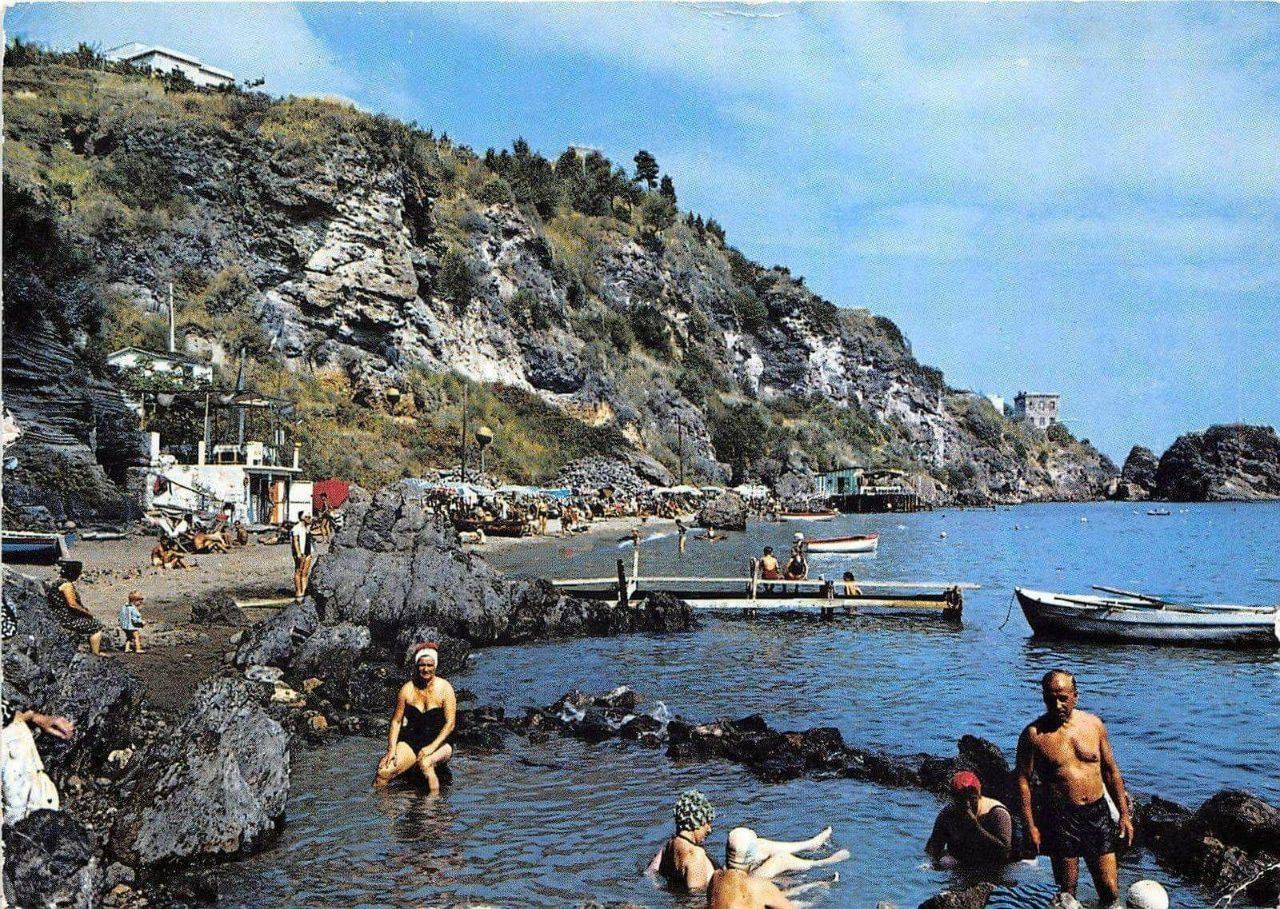 The one thing I know I will never forget is how much my parents laughed with their friends and family in Ischia. In Ischia there was history. They were clearly at ease, speaking dialect, familiar with their ‘home’. My sister and I also felt “at home”. This introduction to the island, its wonder and people instilled, over time, a sense of responsibility to know more about my heritage and preserve all memories. It was on this trip that my awareness of my Ischitan origins developed….with pride.

Comments powered by CComment